


Fragmented systems, rising cost pressures, and shifting risk profiles are making procurement harder than ever to manage. Strategies that worked just a few years ago are now too rigid, manual, or disconnected to keep up.
So what does it take to regain control and build one that’s both resilient and scalable?
This blog breaks down what a successful procurement strategy looks like in 2026, including a working definition, a strategic procurement framework, and the key steps to building one. You’ll learn how to review your current approach, pinpoint gaps, and start improveming right away, focusing on automation, data visibility, and stakeholder alignment.
Key Takeaways
- A modern procurement strategy development needs tight alignment with business objectives, backed by real-time data.
- Platform-enabled capabilities like workflow automation, supplier segmentation, and performance metrics tracking are essential for scale and resilience
- Modern strategies now run on a human-agent model, where AI agents handle the admin work so procurement teams can focus on strategy and negotiation.
- Success depends on cross-functional collaboration, continuous improvement, and the ability to adapt quickly to shifting risk and findings from market analysis.
Effective procurement strategies are data- and performance-driven, enabled by a digital procurement platform that’s capable of integrating across systems to support enterprise-scale operations. The result is measurable outcomes driven by automation and stakeholder alignment.
Here’s a 4-part framework to help you start building your procurement strategy.
A 4-Part Framework for a Modern Procurement Strategy
Here are the four pillars that define a modern, enterprise-grade procurement strategy:
1. Strategic Alignment and Goal Setting
Every effective procurement strategy planning starts with clear alignment to enterprise-wide objectives. Whether the focus iscost reduction, quality improvement, or supply chain resilience, procurement must play a concrete role in delivering outcomes the business cares about.
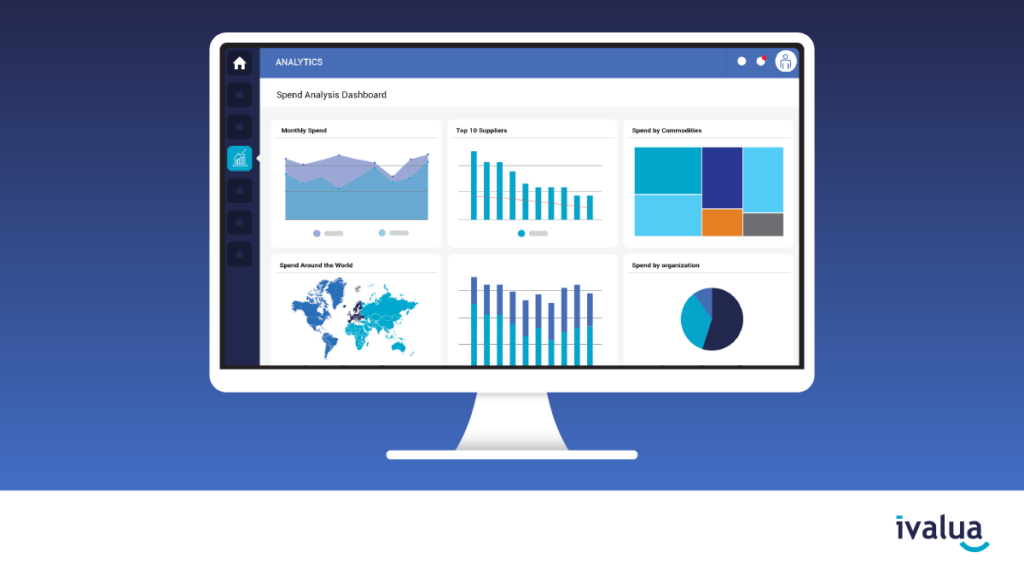
That means defining measurable goals and leveraging spend analytics and insights to track progress over time.
2. Core Operational Focus Areas
A modern strategy prioritizes foundational capabilities, including spend analysis, vendor management, request-for-proposal (RFP) workflows, contract lifecycle management, and risk management.
Together, they form procurement’s operational backbone and must sit within a unified platform to ensure consistency, compliance, and agility.
3. Automating Workflows and Aligning Stakeholders
Process automation reduces friction and increases efficiency, but it only drives results when paired with stakeholder alignment.
Modern procurement strategies need role-based access, flexible approval routing, and performance metrics tracking tied to business KPIs, like cycle time, cost avoidance, and policy adherence.
The next step is agentic. Ivalua’s embedded AI copilot, IVA, handles repetitive work, like approvals, exception flags, RFP drafts, and record updates, so that procurement teams can focus on strategy and negotiation.
Platforms should enable structured collaboration across the full cycle, from intake management to invoice automation, with agents and people working in the same system.
4. Track Performance Metrics and Drive Continuous Improvement
A successful procurement strategy is data-driven and built for continuous improvement across key metrics like cost savings, supplier performance, delivery reliability, and ESG compliance.
Regular reviews and feedback loops help teams and suppliers adapt, refine processes, and demonstrate strategic value to the business.
With the framework in place, the next step is putting it into – and that’s where our step-by-step guide comes in.
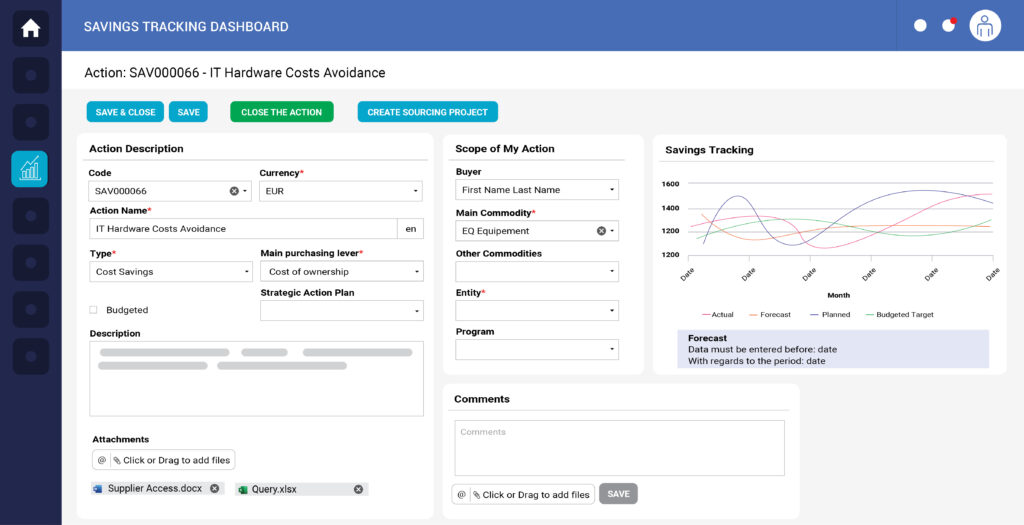
9 Steps to Build Your 2026 Procurement Strategy
Turning a procurement strategy into real-world impact takes structured procurement planning, cross-functional coordination, and a modern AI-powered procurement platform.
These nine steps offer a roadmap to assess, strengthen, and execute your strategy in a data-driven, scalable way.
1. Define Measurable Business Objectives for Procurement
Align procurement goals with broader business priorities like reducing COGS, improving working capital, or hitting ESG compliance targets.
Specific metrics like cost avoidance, on-time delivery rates, total cost of ownership, or percentage of spend on supplier diversity help drive accountability.
Setting this alignment early keeps you tracking against outcomes that leadership cares about.
2. Segment Suppliers by Strategic Value and Risk
Build a tiered supplier model based on annual spend, importance to core operations, geographic concentration, and risk exposure.
Segmentation lets you tailor supplier management strategies, like focusing risk mitigation efforts on sole-source vendors or negotiating long-term value with strategic suppliers.
3. Map Current Procurement Processes and System Coverage
Document how procurement process activities flow across sourcing, tender management, contract negotiation, purchasing, and invoicing. Look for handoffs, bottlenecks, and processes still handled manually or in disconnected tools.
This mapping exercise often surfaces a fragmented tool stack, where sourcing sits in one system, contracts in another, and invoicing somewhere else. A full source-to-pay suite like Ivalua runs on a single data model and a single UI, so every stage of the procurement lifecycle draws from the same source-of-truth.
. Dive deeper into this and learn about best practices and strategies for procurement process improvement.
4. Strengthen Data Visibility to Sharpen Your Sourcing Strategy
Procurement teams need consistent access to pricing and performance history, contract terms, and supplier risk profiles throughout the entire procurement lifecycle, not just at the negotiation stage. In many organizations, this information lives in multiple places, making it hard to use effectively.
Centralizing it improves sourcing decisions and strengthens collaboration across procurement, legal, and other business units. It’s also what makes spend analysis possible. When contracts, POs, invoices, and supplier data sit on a unified foundation, you clearly see where money is going and why.
When you layer Ivalua’s agent, IVA, on top of that data, accessing information becomes much easier than waiting on static dashboards or a data team to pull a report. Procurement teams gain visibility on-demand by simply asking IVA.
You can see how this applies in areas like contract lifecycle management, where visibility into obligations and clauses can influence sourcing strategy.
5. Align Sourcing Decisions with Procurement Policy and Compliance Rules
Manual reviews and policy enforcement break down in complex enterprise environments. Embedding compliance management into intake and sourcing workflows reduces bottlenecks and applies procurement policy consistently.
Intake management software with built-in controls standardizes how requests are handled and who gets involved.
6. Use Category Management to Prioritize High-Impact Sourcing
Apply strategic sourcing resources where they’ll deliver the most value, like in high-spend categories, supply-constrained markets, or areas with innovation potential like IT, logistics, and critical raw materials.
Low-risk or low-spend categories are often better served by guided buying or catalog-driven procurement.
Strategic prioritization using category management requires coordination across business units and a unified source-to-pay platform to manage the complexity.
7. Streamline Stakeholder Engagement Across Functions
Procurement can’t execute alone. Effective strategies depend on early, consistent input from legal, finance, IT, and operations, built into shared workflows rather than ad hoc emails.
Structured collaboration supports digital procurement transformation efforts and strengthens supply-side performance.
8. Tie Reporting to Business-Critical Outcomes
Activity metrics like POs issued or how many suppliers have been onboarded provide some visibility, but they don’t capture the full value procurement delivers to the organization.
Instead, focus on indicators that reflect business impact like cycle time reduction, savings realized versus forecasted savings, or progress toward sustainable procurement and ESG benchmarks. These metrics should be aligned with your procurement analytics tools to guide long-term improvements.
9. Pressure-Test Your Strategy with Real Risk Scenarios
Once your strategy is defined, stress-test it.
- What happens if a critical supplier fails?
- How does your cost structure hold up under inflation?
Adding demand forecasting, inventory management, and market analysis into your planning surfaces vulnerabilities and supports better-informed adjustments before disruptions hit.
Get more familiar with supply chain risk management strategies, so you can get the most out of pressure-testing your strategy before you actually implement it.
Success Story: How Rheinmetall Scaled Strategic Procurement Across Global Operations
Rheinmetall, a global leader in defense and civilian manufacturing, was struggling to scale its procurement operations at the pace of business expansion. Fragmented legacy processes across regions and business units were creating inefficiencies, and a major ERP consolidation highlighted the need for a unified, secure procurement management software.
Rheinmetall required a solution that could meet the distinct needs of both its defense and civilian divisions while meeting strict security and compliance mandates.
By implementing Ivalua’s unified Source-to-Pay platform, Rheinmetall drove strategic procurement across its global operations, strengthened supplier collaboration, centralized supplier risk management, and gained the spend visibility needed to support growth.
Watch the video to learn more about Rheinmetall and Ivalua.
Build a Procurement Strategy That Scales and Delivers
In 2026, a successful procurement strategy is about more than just cost savings and contract compliance. It’s a connected, adaptable framework that drives measurable value across the business.
The framework in this blog supports a resilient, performance-driven approach across the entire procurement lifecycle, from setting goals to digitizing workflows and strong supplier relationship management.
Underpinning all of this is an enterprise-grade, AI-Powered procurement platform that enables visibility, automation, and control at scale. Whether you’re refining an existing strategy or starting from scratch, investing in the right foundation is the critical first step.
Ivalua was named a Leader in the 2026 Gartner Magic Quadrant for Source-to-Pay Suites for the third year running, and the 2025 Forrester Total Economic Impact study found a 393% ROI with payback in under six months.
Close Strategy Gaps With Ivalua’s Source-to-Pay Platform
FAQs Around Procurement Strategy
A procurement strategy is a high-level plan that defines how an enterprise sources goods and services to achieve business goals while managing risk, controlling costs, and ensuring supply continuity.
Effective strategies are performance-driven and enabled by an e-procurement solution that’s capable of integrating across systems to support enterprise-scale operations. The platform supports data-driven decision-making and delivers measurable outcomes through automation and stakeholder alignment.
An effective procurement strategy aligns closely with the organization’s broader business goals, supports compliance, and drives cost efficiency. It should also enable flexibility, promote supplier collaboration, and leverage procurement technology for visibility and control.
Procurement strategies should be reviewed at least annually, or more frequently if there are major shifts in the market, supply chain, or internal priorities. Regular updates ensure the strategy remains aligned with business objectives and evolving risks.
Not necessarily. While they may share overarching goals, direct and indirect procurement often require tailored approaches based on different stakeholders, timelines, and cost structures. A unified strategy can offer consistency, but execution should reflect category-specific needs.
Strategic sourcing is a tactical component focused on supplier selection and cost optimization, whereas procurement strategy defines the overall vision, priorities, and long-term goals of procurement. In other words, strategic sourcing is one tool used to execute a broader procurement strategy. Learn more about strategic sourcing vs procurement.
The success of a procurement strategy is typically measured by cost savings, supplier performance evaluation, risk mitigation, and alignment with business goals. Additional KPIs may include contract compliance, cycle times, and stakeholder satisfaction across the enterprise.